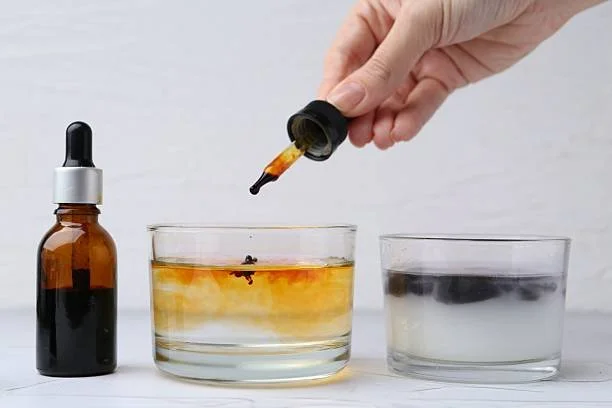
The 5% iodine solution is one of the most widely used and trusted iodine preparations across medical, laboratory, pharmaceutical, and industrial sectors. Its effectiveness as an antiseptic, disinfectant, and chemical reagent has made it a staple for decades. This solution combines elemental iodine with suitable solvents to deliver reliable antimicrobial action while maintaining stability and ease of application.
The popularity of 5% iodine solution stems from its broad-spectrum activity, affordability, and versatility. We present this detailed guide to ensure accurate understanding, correct usage, and informed handling for professional and educational purposes.
Chemical Composition of 5% Iodine Solution

A 5% iodine solution typically contains:
- 5 g of elemental iodine (I₂) per 100 mL of solution
- Potassium iodide (KI) or sodium iodide to increase iodine solubility
- Distilled water or alcohol as the solvent
Potassium iodide plays a crucial role by forming triiodide ions (I₃⁻), which significantly enhance iodine’s solubility in water. This balanced formulation ensures consistent concentration, stability, and effectiveness.
Physical and Chemical Properties
The 5% iodine solution exhibits distinct characteristics that support its broad usability:
- Appearance: Dark brown to reddish-brown liquid
- Odor: Strong, characteristic iodine smell
- Solubility: Completely soluble in water when iodide salts are present
- Reactivity: Strong oxidizing agent
- Stability: Stable under proper storage conditions
These properties make the solution suitable for rapid antimicrobial action and analytical chemistry applications.
Preparation Method of 5% Iodine Solution
We emphasize accurate preparation to maintain purity and concentration. The standard laboratory preparation involves:
- Weighing 5 g of iodine crystals.
- Dissolve 10 g of potassium iodide in a small volume of distilled water.
- Gradually add iodine crystals while stirring continuously.
- Dilute the mixture with distilled water to make 100 mL total volume.
- Storing in an amber-colored, tightly sealed bottle.
This method ensures complete dissolution, uniform concentration, and long-term stability.
Medical and Healthcare Applications
Antiseptic and Disinfectant Use
We commonly use 5% iodine solution as a topical antiseptic for:
- Skin disinfection before injections and minor procedures.
- Wound cleansing and infection prevention.
- Preoperative skin preparation.
Its effectiveness against bacteria, viruses, fungi, and protozoa makes it a preferred choice in healthcare environments.
Mechanism of Antimicrobial Action
Iodine acts by penetrating microbial cell walls and denaturing proteins and enzymes, leading to rapid cell death. This mechanism prevents resistance development, offering a major advantage over many antibiotics.
Laboratory and Analytical Applications

Chemical Reagent
In laboratories, 5% iodine solution serves as an essential reagent for:
- Iodometric titrations
- Oxidation-reduction reactions
- Detection of unsaturated compounds
Its predictable reactivity ensures high analytical accuracy.
Starch Test Indicator
We frequently utilize iodine solution for the starch test, where it produces a deep blue-black color upon contact with starch. This reaction is widely applied in:
- Food quality testing
- Biochemical experiments
- Educational demonstrations
Industrial and Commercial Uses
Water Treatment
We apply 5% iodine solution for emergency water purification, especially in disaster relief scenarios. Iodine effectively eliminates pathogenic microorganisms, ensuring safer drinking water when other methods are unavailable.
Pharmaceutical Manufacturing
The solution plays a role in drug formulation, intermediate synthesis, and quality control processes, where precise iodine concentration is essential.
Advantages of Using 5% Iodine Solution
We identify several key advantages:
- Broad-spectrum antimicrobial activity
- Fast-acting and reliable
- Cost-effective and widely available
- Minimal resistance development
- Versatile applications across sectors
These benefits explain its continued relevance despite the availability of newer antiseptics.
Safety Measures and Handling Guidelines
While highly effective, 5% iodine solution requires careful handling:
- Avoid prolonged skin exposure to prevent irritation.
- Do not ingest unless prescribed by a healthcare professional.
- Use gloves during laboratory handling.
- Store away from light and heat.
We strongly recommend following the material safety data guidelines to ensure safe usage.
Storage and Shelf Life

Proper storage preserves efficacy:
- Store in amber or dark glass bottles
- Keep at a cool room temperature
- Ensure containers are airtight
Under optimal conditions, 5% iodine solution maintains stability for extended periods without significant degradation.
Environmental Considerations
We acknowledge that iodine is a naturally occurring element, but excessive disposal may impact aquatic ecosystems. Controlled use and proper disposal practices minimize environmental risks while maintaining operational efficiency.
Comparison with Other Iodine Preparations
Compared to tincture iodine and povidone-iodine:
- 5% iodine solution offers higher iodine availability
- Acts faster than povidone-iodine
- More suitable for laboratory and analytical applications
Each formulation serves specific needs, but the 5% solution remains unmatched in versatility.
Conclusion
We affirm that the 5% iodine solution remains an indispensable chemical preparation across medical, laboratory, industrial, and educational fields. Its reliable antimicrobial properties, chemical stability, and multifunctional applications make it a trusted choice worldwide. Proper preparation, handling, and storage ensure maximum effectiveness and safety. Through informed use, this solution continues to play a vital role in public health, scientific research, and industrial processes.
What is a 5% iodine solution?
The 5% iodine solution is one of the most widely used and trusted iodine preparations across medical, laboratory, pharmaceutical, and industrial sectors. Its effectiveness as an antiseptic, disinfectant, and chemical reagent has made it a staple for decades. This solution combines elemental iodine with suitable solvents to deliver reliable antimicrobial action while maintaining stability and ease of application.
The popularity of 5% iodine solution stems from its broad-spectrum activity, affordability, and versatility. We present this detailed guide to ensure accurate understanding, correct usage, and informed handling for professional and educational purposes.
Chemical Composition of 5% Iodine Solution
A 5% iodine solution typically contains:
5 g of elemental iodine (I₂) per 100 mL of solution
Potassium iodide (KI) or sodium iodide to increase iodine solubility
Distilled water or alcohol as the solvent
Potassium iodide plays a crucial role by forming triiodide ions (I₃⁻), which significantly enhance iodine’s solubility in water. This balanced formulation ensures consistent concentration, stability, and effectiveness.
Physical and Chemical Properties
The 5% iodine solution exhibits distinct characteristics that support its broad usability:
Appearance: Dark brown to reddish-brown liquid
Odor: Strong, characteristic iodine smell
Solubility: Completely soluble in water when iodide salts are present
Reactivity: Strong oxidizing agent
Stability: Stable under proper storage conditions
These properties make the solution suitable for rapid antimicrobial action and analytical chemistry applications.
What is the main use of a 5% iodine solution?
How does a 5% iodine solution work as an antiseptic?
Is 5% iodine solution safe for skin application?
What is a 5% iodine solution, and how can it be prepared?
The 5% iodine solution is one of the most widely used and trusted iodine preparations across medical, laboratory, pharmaceutical, and industrial sectors. Its effectiveness as an antiseptic, disinfectant, and chemical reagent has made it a staple for decades. This solution combines elemental iodine with suitable solvents to deliver reliable antimicrobial action while maintaining stability and ease of application.
The popularity of 5% iodine solution stems from its broad-spectrum activity, affordability, and versatility. We present this detailed guide to ensure accurate understanding, correct usage, and informed handling for professional and educational purposes.
Chemical Composition of 5% Iodine Solution
A 5% iodine solution typically contains:
5 g of elemental iodine (I₂) per 100 mL of solution
Potassium iodide (KI) or sodium iodide to increase iodine solubility
Distilled water or alcohol as the solvent
Potassium iodide plays a crucial role by forming triiodide ions (I₃⁻), which significantly enhance iodine’s solubility in water. This balanced formulation ensures consistent concentration, stability, and effectiveness.
Physical and Chemical Properties
The 5% iodine solution exhibits distinct characteristics that support its broad usability:
Appearance: Dark brown to reddish-brown liquid
Odor: Strong, characteristic iodine smell
Solubility: Completely soluble in water when iodide salts are present
Reactivity: Strong oxidizing agent
Stability: Stable under proper storage conditions
These properties make the solution suitable for rapid antimicrobial action and analytical chemistry applications.
Preparation Method of 5% Iodine Solution
We emphasize accurate preparation to maintain purity and concentration. The standard laboratory preparation involves:
Weighing 5 g of iodine crystals.
Dissolve 10 g of potassium iodide in a small volume of distilled water.
Gradually add iodine crystals while stirring continuously.
Dilute the mixture with distilled water to make 100 mL total volume.
Storing in an amber-colored, tightly sealed bottle.
This method ensures complete dissolution, uniform concentration, and long-term stability.
Medical and Healthcare Applications
Antiseptic and Disinfectant Use
We commonly use 5% iodine solution as a topical antiseptic for:
Skin disinfection before injections and minor procedures.
Wound cleansing and infection prevention.
Preoperative skin preparation.
Its effectiveness against bacteria, viruses, fungi, and protozoa makes it a preferred choice in healthcare environments.
Mechanism of Antimicrobial Action
Iodine acts by penetrating microbial cell walls and denaturing proteins and enzymes, leading to rapid cell death. This mechanism prevents resistance development, offering a major advantage over many antibiotics.
Laboratory and Analytical Applications
Chemical Reagent
In laboratories, 5% iodine solution serves as an essential reagent for:
Iodometric titrations
Oxidation-reduction reactions
Detection of unsaturated compounds
Its predictable reactivity ensures high analytical accuracy.
Starch Test Indicator
We frequently utilize iodine solution for the starch test, where it produces a deep blue-black color upon contact with starch. This reaction is widely applied in:
Food quality testing
Biochemical experiments
Educational demonstrations
Industrial and Commercial Uses
Water Treatment
We apply 5% iodine solution for emergency water purification, especially in disaster relief scenarios. Iodine effectively eliminates pathogenic microorganisms, ensuring safer drinking water when other methods are unavailable.
Pharmaceutical Manufacturing
The solution plays a role in drug formulation, intermediate synthesis, and quality control processes, where precise iodine concentration is essential.
Advantages of Using 5% Iodine Solution
We identify several key advantages:
Broad-spectrum antimicrobial activity
Fast-acting and reliable
Cost-effective and widely available
Minimal resistance development
Versatile applications across sectors
These benefits explain its continued relevance despite the availability of newer antiseptics.
Safety Measures and Handling Guidelines
While highly effective, 5% iodine solution requires careful handling:
Avoid prolonged skin exposure to prevent irritation.
Do not ingest unless prescribed by a healthcare professional.
Use gloves during laboratory handling.
Store away from light and heat.
We strongly recommend following the material safety data guidelines to ensure safe usage.
Storage and Shelf Life
Proper storage preserves efficacy:
Store in amber or dark glass bottles
Keep at a cool room temperature
Ensure containers are airtight
Under optimal conditions, 5% iodine solution maintains stability for extended periods without significant degradation.
Environmental Considerations
We acknowledge that iodine is a naturally occurring element, but excessive disposal may impact aquatic ecosystems. Controlled use and proper disposal practices minimize environmental risks while maintaining operational efficiency.
Comparison with Other Iodine Preparations
Compared to tincture iodine and povidone-iodine:
5% iodine solution offers higher iodine availability
Acts faster than povidone-iodine
More suitable for laboratory and analytical applications
Each formulation serves specific needs, but the 5% solution remains unmatched in versatility.
Conclusion
We affirm that the 5% iodine solution remains an indispensable chemical preparation across medical, laboratory, industrial, and educational fields. Its reliable antimicrobial properties, chemical stability, and multifunctional applications make it a trusted choice worldwide. Proper preparation, handling, and storage ensure maximum effectiveness and safety. Through informed use, this solution continues to play a vital role in public health, scientific research, and industrial processes.
What is the method of preparation of 5% Iodine solution?
The 5% iodine solution is one of the most widely used and trusted iodine preparations across medical, laboratory, pharmaceutical, and industrial sectors. Its effectiveness as an antiseptic, disinfectant, and chemical reagent has made it a staple for decades. This solution combines elemental iodine with suitable solvents to deliver reliable antimicrobial action while maintaining stability and ease of application.
The popularity of 5% iodine solution stems from its broad-spectrum activity, affordability, and versatility. We present this detailed guide to ensure accurate understanding, correct usage, and informed handling for professional and educational purposes.
Chemical Composition of 5% Iodine Solution
A 5% iodine solution typically contains:
5 g of elemental iodine (I₂) per 100 mL of solution
Potassium iodide (KI) or sodium iodide to increase iodine solubility
Distilled water or alcohol as the solvent
Potassium iodide plays a crucial role by forming triiodide ions (I₃⁻), which significantly enhance iodine’s solubility in water. This balanced formulation ensures consistent concentration, stability, and effectiveness.
Physical and Chemical Properties
The 5% iodine solution exhibits distinct characteristics that support its broad usability:
Appearance: Dark brown to reddish-brown liquid
Odor: Strong, characteristic iodine smell
Solubility: Completely soluble in water when iodide salts are present
Reactivity: Strong oxidizing agent
Stability: Stable under proper storage conditions
These properties make the solution suitable for rapid antimicrobial action and analytical chemistry applications.
Preparation Method of 5% Iodine Solution
We emphasize accurate preparation to maintain purity and concentration. The standard laboratory preparation involves:
Weighing 5 g of iodine crystals.
Dissolve 10 g of potassium iodide in a small volume of distilled water.
Gradually add iodine crystals while stirring continuously.
Dilute the mixture with distilled water to make 100 mL total volume.
Storing in an amber-colored, tightly sealed bottle.
This method ensures complete dissolution, uniform concentration, and long-term stability.
Medical and Healthcare Applications
Antiseptic and Disinfectant Use
We commonly use 5% iodine solution as a topical antiseptic for:
Skin disinfection before injections and minor procedures.
Wound cleansing and infection prevention.
Preoperative skin preparation.
Its effectiveness against bacteria, viruses, fungi, and protozoa makes it a preferred choice in healthcare environments.
Mechanism of Antimicrobial Action
Iodine acts by penetrating microbial cell walls and denaturing proteins and enzymes, leading to rapid cell death. This mechanism prevents resistance development, offering a major advantage over many antibiotics.
Laboratory and Analytical Applications
Chemical Reagent
In laboratories, 5% iodine solution serves as an essential reagent for:
Iodometric titrations
Oxidation-reduction reactions
Detection of unsaturated compounds
Its predictable reactivity ensures high analytical accuracy.
Starch Test Indicator
We frequently utilize iodine solution for the starch test, where it produces a deep blue-black color upon contact with starch. This reaction is widely applied in:
Food quality testing
Biochemical experiments
Educational demonstrations
Industrial and Commercial Uses
Water Treatment
We apply 5% iodine solution for emergency water purification, especially in disaster relief scenarios. Iodine effectively eliminates pathogenic microorganisms, ensuring safer drinking water when other methods are unavailable.
Pharmaceutical Manufacturing
The solution plays a role in drug formulation, intermediate synthesis, and quality control processes, where precise iodine concentration is essential.
Advantages of Using 5% Iodine Solution
We identify several key advantages:
Broad-spectrum antimicrobial activity
Fast-acting and reliable
Cost-effective and widely available
Minimal resistance development
Versatile applications across sectors
These benefits explain its continued relevance despite the availability of newer antiseptics.
Safety Measures and Handling Guidelines
While highly effective, 5% iodine solution requires careful handling:
Avoid prolonged skin exposure to prevent irritation.
Do not ingest unless prescribed by a healthcare professional.
Use gloves during laboratory handling.
Store away from light and heat.
We strongly recommend following the material safety data guidelines to ensure safe usage.
Storage and Shelf Life
Proper storage preserves efficacy:
Store in amber or dark glass bottles
Keep at a cool room temperature
Ensure containers are airtight
Under optimal conditions, 5% iodine solution maintains stability for extended periods without significant degradation.
Environmental Considerations
We acknowledge that iodine is a naturally occurring element, but excessive disposal may impact aquatic ecosystems. Controlled use and proper disposal practices minimize environmental risks while maintaining operational efficiency.
Comparison with Other Iodine Preparations
Compared to tincture iodine and povidone-iodine:
5% iodine solution offers higher iodine availability
Acts faster than povidone-iodine
More suitable for laboratory and analytical applications
Each formulation serves specific needs, but the 5% solution remains unmatched in versatility.
Conclusion
We affirm that the 5% iodine solution remains an indispensable chemical preparation across medical, laboratory, industrial, and educational fields. Its reliable antimicrobial properties, chemical stability, and multifunctional applications make it a trusted choice worldwide. Proper preparation, handling, and storage ensure maximum effectiveness and safety. Through informed use, this solution continues to play a vital role in public health, scientific research, and industrial processes.